Why NGOs Need More Than Just a Website, but a Digital System
A website communicates what an NGO does. A digital system helps manage how the organization operates — from field data collection and project management to analytics, reporting, and decision-making.
For NGOs and international development organizations, a website is an important communication channel. It explains who you are, presents projects and results, and helps build trust with donors, partners, and communities.
But a website alone does very little to improve day-to-day operations. Real digital transformation begins when information from field teams, forms, spreadsheets, CRM platforms, finance systems, and project management tools starts working as one connected digital system.
From field operations to management decisions
NGO projects generate data at many different points: beneficiary registration, needs assessments, monitoring visits, inspections, distributions, case management, or infrastructure activities.
When this information is stored in separate spreadsheets, shared by email, or manually transferred between systems, teams spend significant time managing data instead of using it.
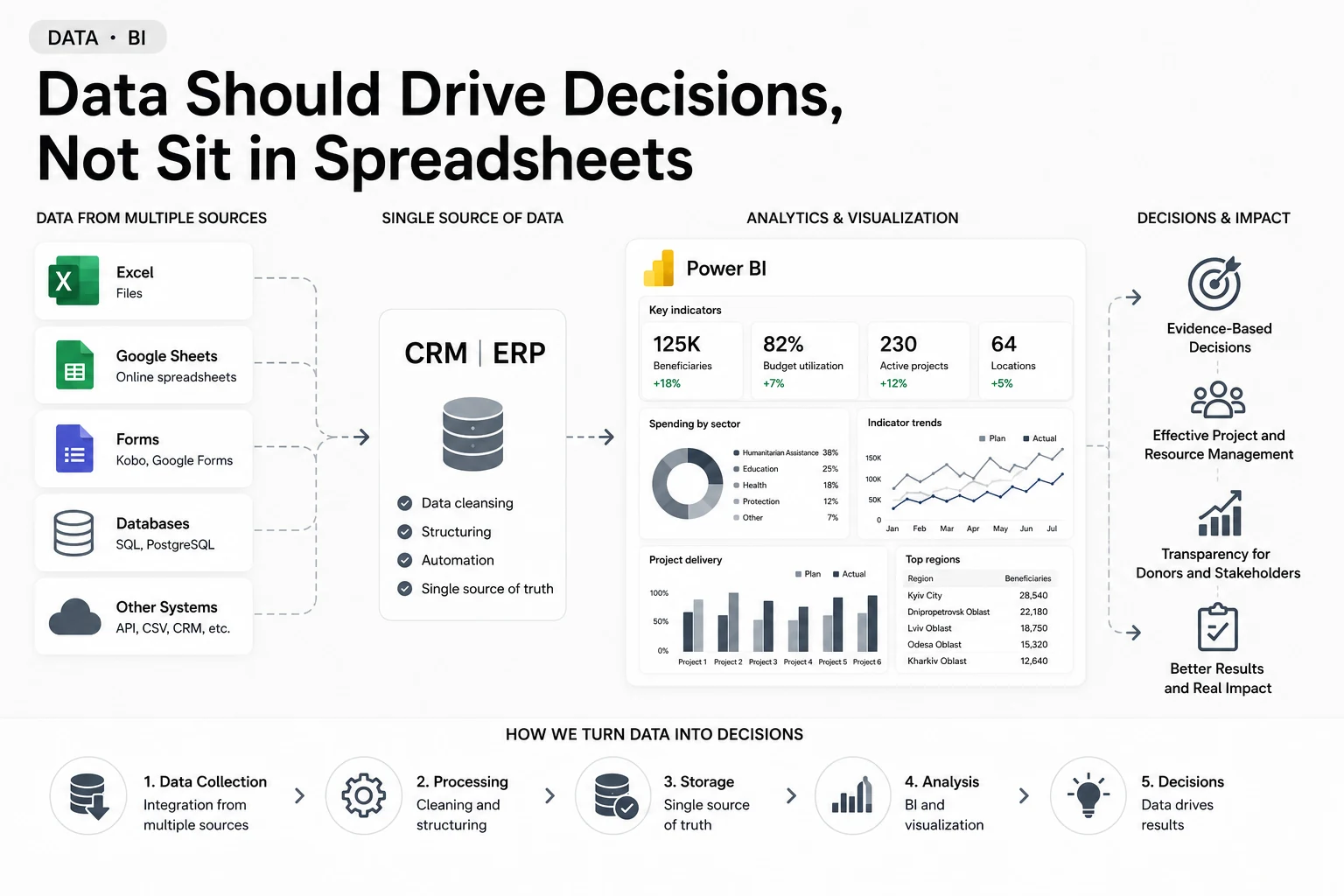
Field team → Digital form → Central system → Analytics → Decisions.
Tools such as KoboToolbox, CommCare, Microsoft Forms, Google Forms, or custom mobile applications can support structured field data collection. The information can then flow automatically into a CRM, ERP, database, or internal portal.
A single source of truth
One of the most common challenges is having multiple versions of the same information. The programme team has one spreadsheet. MEAL has another. Finance works with a third file. A separate dataset is then prepared for donor reporting.
A well-designed digital system creates a single source of truth. Instead of maintaining dozens of disconnected files, teams work with common definitions, structured records, and consistent data.
Analytics instead of manual reporting
Once data is structured, platforms such as Power BI or Looker Studio can automatically provide visibility into project progress, beneficiary reach, indicator performance, geographic coverage, resource utilization, risks, operational issues, and trends over time.
Management receives more than a report. It receives a tool for decision-making.
The website is only one layer
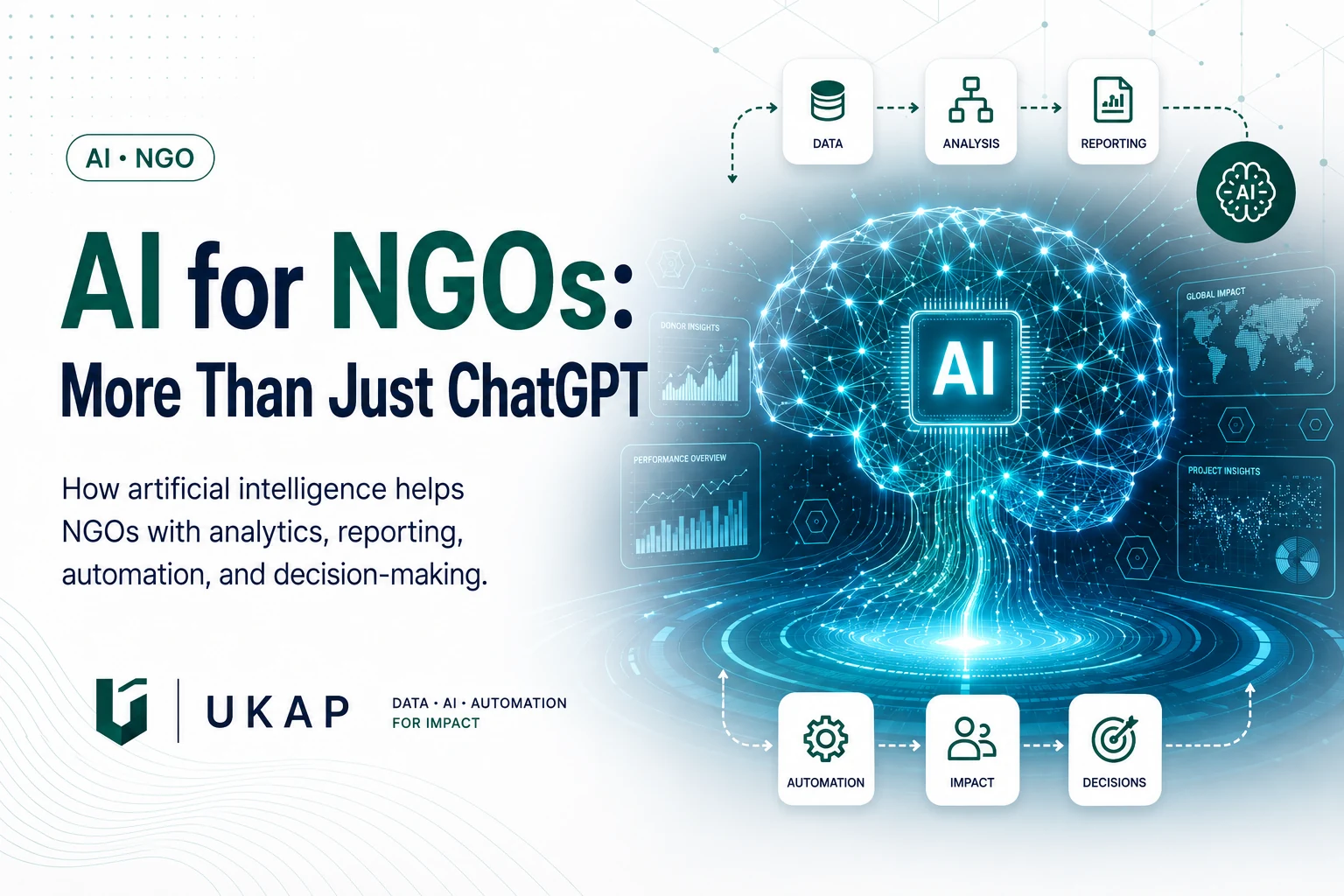
For a modern NGO, the website should be the external layer of a much broader digital ecosystem. Behind it can operate forms → CRM → databases → portals → automation → BI → AI.
This is where technology begins to create operational value — helping organizations become faster, more transparent, and easier to scale.
UKAP helps organizations design these connected systems, from field data collection to management dashboards and automated reporting.