AI for NGOs: More Than Just ChatGPT
AI for NGOs is much more than text generation. Its real value appears in analytics, reporting, automation, knowledge management, and decision support.
For many people, the term AI has become almost synonymous with ChatGPT. For NGOs and international development organizations, however, the opportunity is much broader.
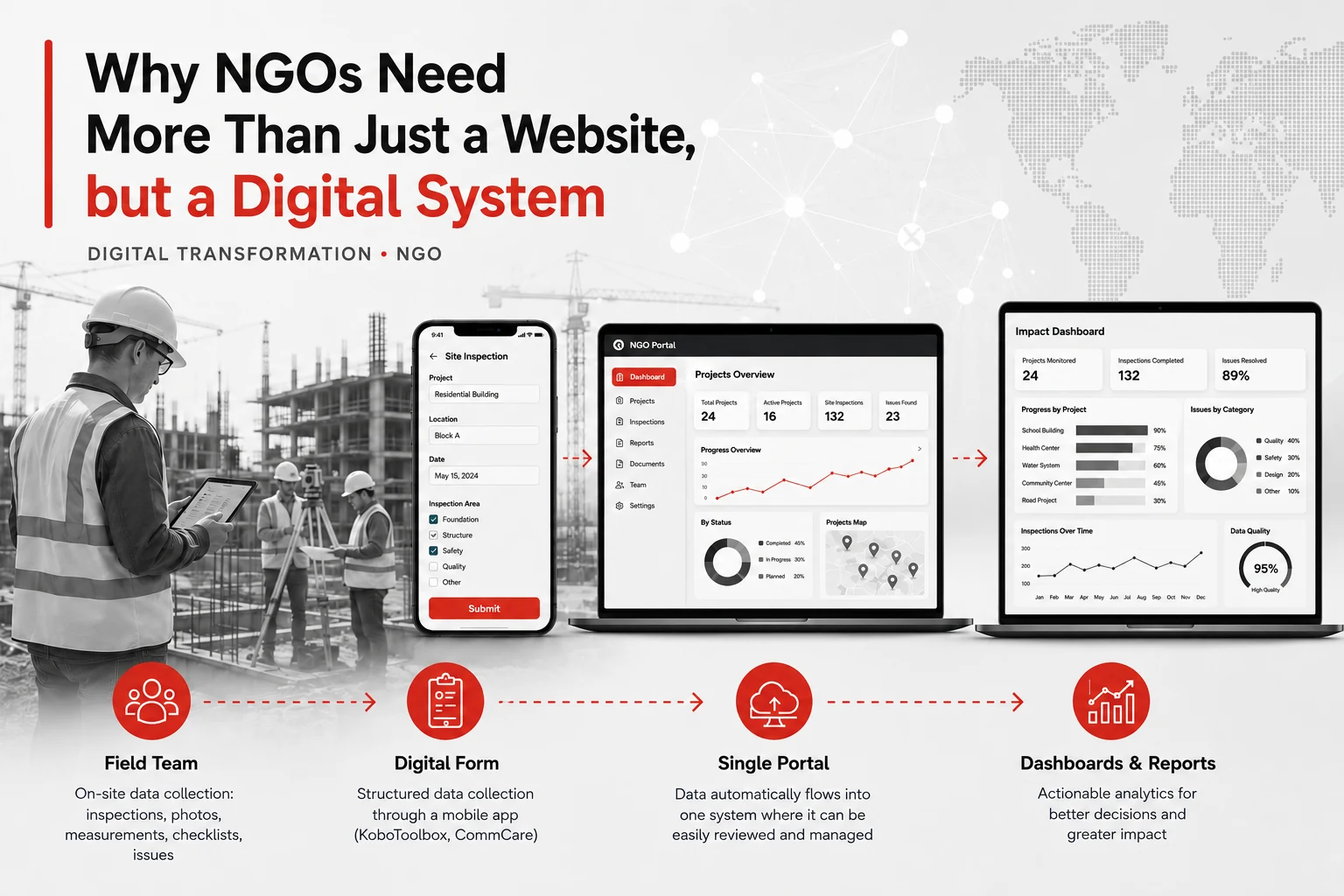
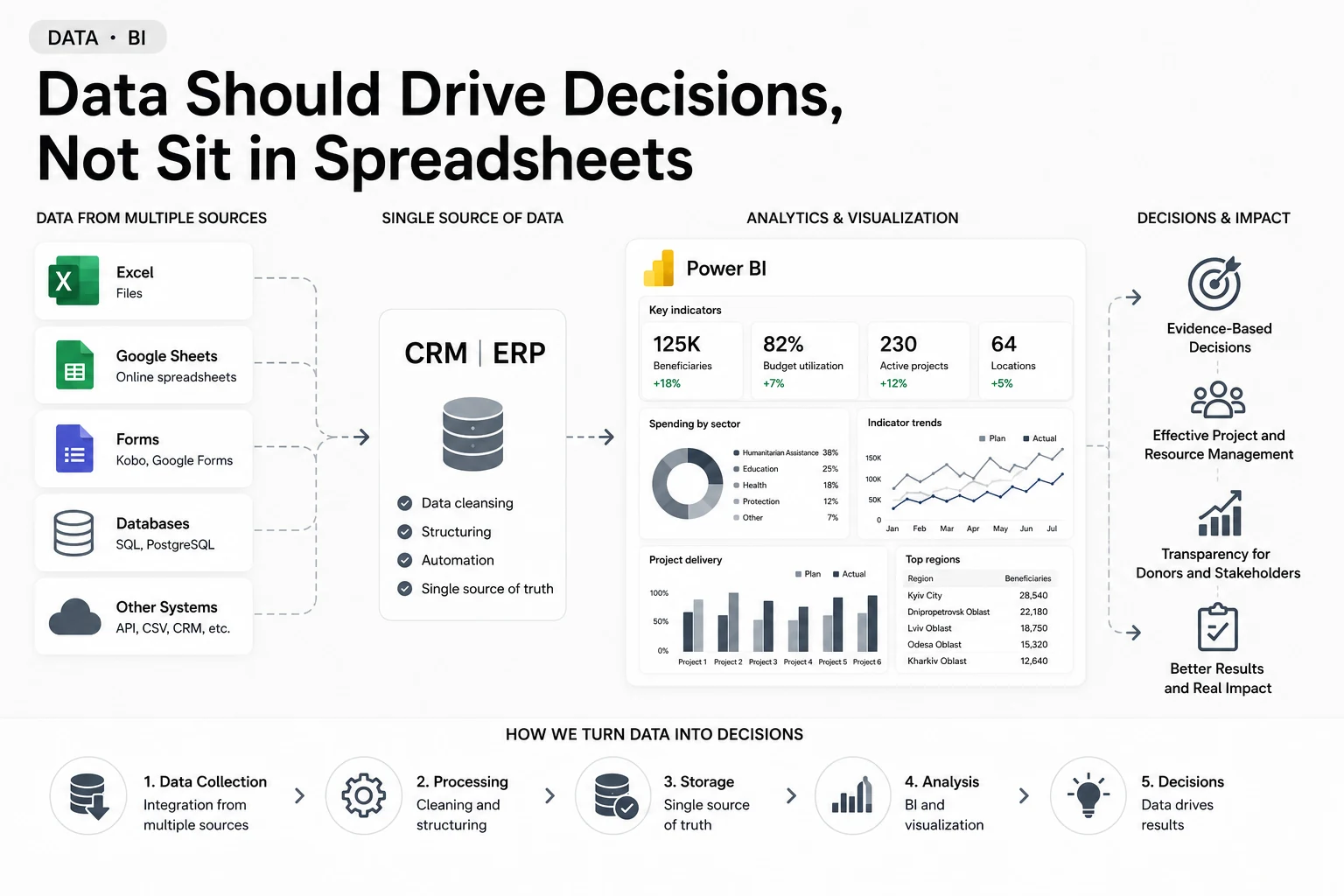
Artificial intelligence can become part of the whole digital environment: Data → Analysis → AI → Decisions → Automation.
1. Analyzing large volumes of information
NGOs accumulate significant amounts of data: registrations, assessments, monitoring forms, feedback, case management records, reports, documents, and project indicators.
AI can help identify patterns, classify records, summarize open-ended responses, and highlight unusual cases.
2. Supporting reporting
MEAL and programme teams often spend significant time preparing recurring reports. When indicators and datasets are already structured, AI can help draft key findings, trend summaries, explanations of deviations, narrative report sections, and management summaries.
Human review remains essential for validation and interpretation.
3. Internal AI assistants
Organizations can create AI assistants that work with their own knowledge base rather than the entire internet. This can include policies, SOPs, project documents, methodologies, FAQs, and technical documentation.
4. Process automation
AI becomes particularly powerful when combined with automation. For example: New form → Validation → Classification → CRM record → Notification → Dashboard update.
This is where AI moves from being a chatbot to becoming part of an operational system.
5. Decision support
The greatest potential value of AI is helping teams move faster from information to action. However, AI should not remove human control.
In humanitarian and development environments, organizations need particular attention to data quality, privacy, access control, explainability, and human oversight.
AI for NGOs is therefore not a standalone technology. It is a new layer built on top of data, processes, and analytics.